
The Workforce Challenge Facing the Pumping Industry: Why Training and Certification Matter More Than Ever
The workforce challenge facing the pumping industry is not a future concern. It is happening today. Through structured training and recognized certification, HI and PSM provide organizations with a practical path to build workforce capability.
Category: PSM Newsletter, Pump System Training, Blogs, Workforce Development September 22, 2026
By Matthew Derner, Senior Manager of Education and Energy Efficiency Training Resources, Hydraulic Institute
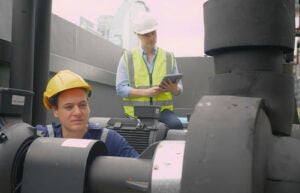 The pump industry is facing a widening workforce and competency challenge.
Operational pressures are rising as pump systems consume significant energy, maintenance costs increase, and optimization opportunities go unrealized. At the same time, experienced professionals are retiring, institutional knowledge is disappearing, succession plans are incomplete, and attracting new talent remains difficult.
Together, these pressures are widening the “capability gap”—a threat to efficiency, reliability, and long-term sustainability. To help close that gap, the Hydraulic Institute and Pump Systems Matter have developed training and certification programs that give organizations a structured path to build, validate, and apply pump system competency.
The Hidden Cost of Tribal Knowledge Loss
For decades, industrial facilities relied on experienced operators, technicians, engineers, and reliability professionals who understood how their systems behaved—when a pump sounded different, which conditions caused recurring failures, and how process changes affected performance.
As these experienced professionals retire, organizations are discovering that years of practical expertise cannot be replaced overnight. The loss of tribal knowledge often results in longer troubleshooting cycles, inconsistent operating practices, increased downtime, and unnecessary energy consumption.
Compounding the challenge, today’s workforce often has less hands-on exposure to pump fundamentals, while modern systems increasingly integrate mechanical, electrical, controls, automation, and data analytics disciplines. As a result, pump professionals need a broader and more complex skill set than ever before.
Why Workforce Development Is an Operational Strategy
Training is often viewed as an HR initiative, but in pump systems, workforce development is an operational strategy.
Every optimization decision, reliability improvement, maintenance action, and energy-saving initiative depends on people with the knowledge to apply technology correctly.
When that competency is missing, organizations are more likely to run equipment to failure instead of trending performance, replace pumps without revisiting system requirements, install instrumentation without using the resulting data, or miss optimization opportunities.
Organizations that invest in workforce competency are better positioned to improve reliability, reduce energy use, and sustain stronger operational performance.
Building a Sustainable Workforce Pipeline
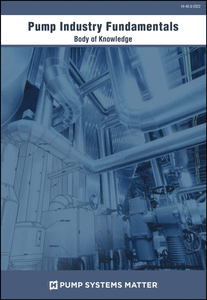 Closing the skills gap requires structured training, validated competency, applied learning, and a sustained commitment to workforce development.
To support this need, the Hydraulic Institute and Pump Systems Matter developed the Pump Industry Fundamentals Body of Knowledge, which defines common knowledge requirements across job functions and market segments. It serves as a roadmap for training and helps organizations establish a consistent foundation for workforce development.
The Role of Certification
Certification provides organizations with a measurable and repeatable method for validating competency.
HI’s certification pathway gives organizations a practical way to develop and validate pump system knowledge. Pump System Certification Level 1 establishes foundational competency in pump system fundamentals; Pump System Certification Level 2 builds on that foundation with applied knowledge for system performance and optimization; and Pump System Assessment Professional validates the ability to assess existing pump systems and identify improvement opportunities.
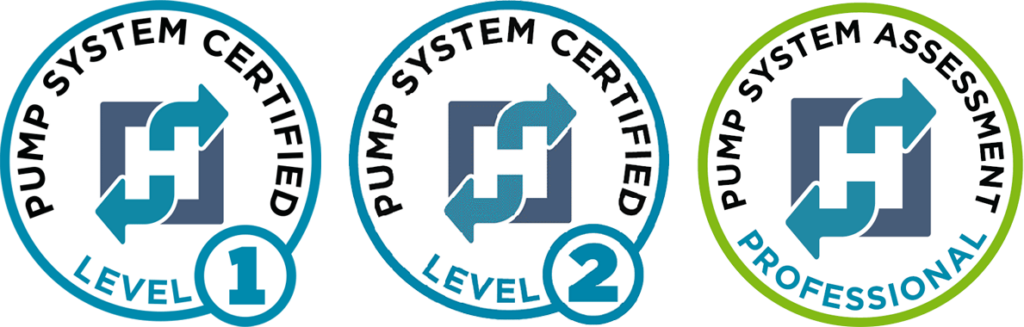
Together, these programs reduce variability, support career development and succession planning, and help employers build a more consistent and credible workforce.
Moving Forward
The workforce challenge facing the pumping industry is not a future concern. It is happening today.
Organizations must manage rising energy costs, reliability demands, and system complexity while preparing for the retirement of experienced personnel and the onboarding of a new generation of workers. Those that thrive will treat workforce development as a strategic investment, not an administrative expense.
Technology will continue to advance. Data will become more abundant. Systems will become more complex.
Through structured training and recognized certification, HI and PSM provide organizations with a practical path to build the workforce capability needed for long-term pump system performance.
SUBSCRIBE TODAY
Get the latest pump industry news, insights, and analysis delivered to your inbox.