
Boiler Feed Pumps Parallel Operation
Three 45-kW (60-hp) pumps supply high pressure water to a boiler. Originally two pumps would operate in case of failure of one pump, however running both pumps at the same time resulted in poor efficiency. The customer decided to stop operation of the backup pump which resulted in increased efficiency of the single pump running as well as reduced costs from only running one pump.
Category: Blogs, Case Studies November 4, 2026
Intended Audience: Boiler Systems
Objective: Review the boiler pump system and determine if any modifications should be made to reduce operating costs.
Description of System: As shown in Figure 1, three 45-kW (60-hp) pumps supplied high-pressure water to a boiler in a food-manufacturing plant. The operating hours were kept even by operating two pumps at a time. The motor current and pump operation is shown in Figure 2. An automatic pressure-reducing valve was used to control boiler level. Original operating instructions dictated that the hours be kept even and that two boiler pumps always operate in case of the failure of one pump.
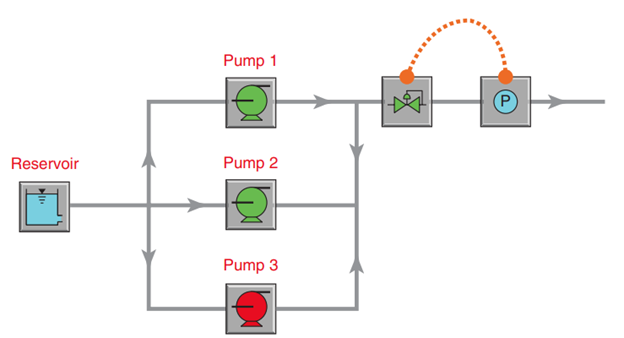
Figure 1: Initial installation and control diagram
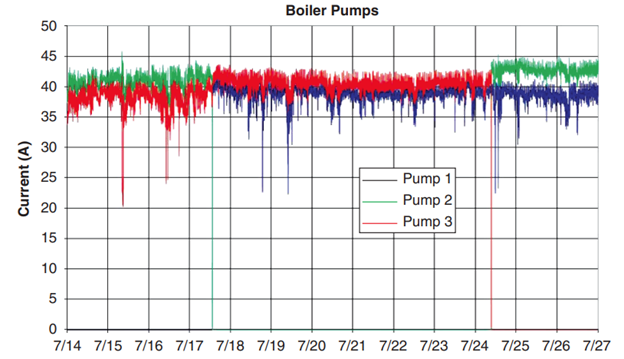
Figure 2: Motor current strip chart
A review of the boiler and pump operation was conducted with the following results:
- The boiler design operating flow and pressure were 42 m3/h (186 gpm) and 1724 kPa (250 psi), respectively.
- Each pump was designed to accommodate the boiler design flow at 2138 kPa (310 psi).
- Design pressure drop through the control valve was 414 kPa (60 psi).
- Actual boiler flow and pressure was 34 m3/h (150 gpm) and 1724 kPa (250 psi), respectively.
- Each pump was operating at 17 m3/h (75 gpm) and 3013 kPa (437 psi) and the actual pressure drop from the pump to the boiler was 1289 kPa (187 psi). The two pumps were consuming more than 60 kW (80 hp) combined and operating at less than 50% efficiency as shown in Figure 3.
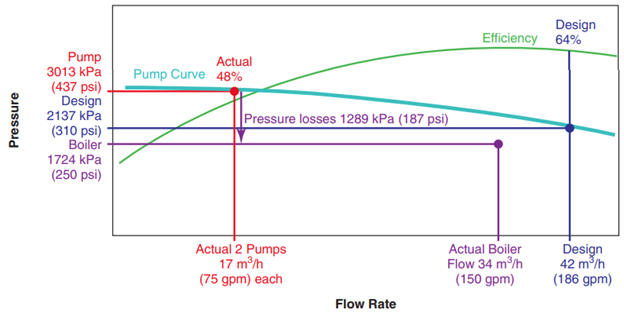
Figure 3: Operating condition before modification
Description of Intervention: Recommended changes to the pumping system were as follows:
- Change pump type and size to match actual boiler system requirements
- Install VFD for boiler level control and leave the control valve fully open
- Turn off the backup pump
The customer implemented the third recommendation at zero cost, reflected in Figure 4.
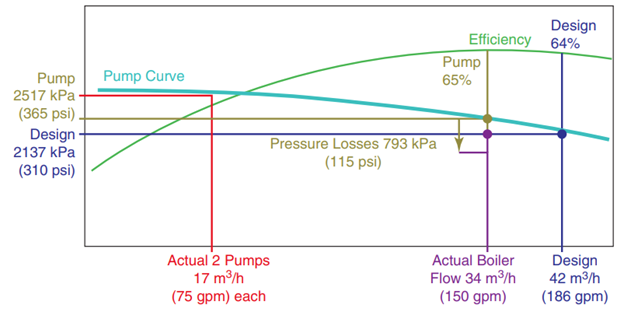
Figure 4: Operating conditions after modification
One boiler feed pump operates and maintains boiler level through the operation of the control valve. The discharge pressure of the pump and the pressure drop through the control valve was reduced, and the flow and efficiency of the pump increased. The pump uses 37 kW (50 hp) and operates at its BEP
Summary of Results: Table 1 shows an immediate return on investment and cost of waiting
since a single pump was properly sized and there was no investment cost to operate a single pump.
Table 1: Return on investment (ROI) calculation
| Electricity cost before installation | $21,000 |
| Electricity cost after installation | $13,000 |
| Electricity cost annual savings | $8,000 |
| Avoided annualized valve maintenance (est.) | $2,500 |
| Total annual savings | $10,500 |
| Project Cost | $0 |
| Utility funding | $0 |
| Net project cost | $0 |
| Simple payback | Immediate |
| Time to implement recommendation | 4+ years |
| Cost of waiting | $42,000 |
Conclusion: This project was identified more than four years before the action of shutting off the backup pump was taken. Nearly $50,000 of electricity cost was wasted in waiting to take action. The implementation of the VFD and elimination of the control valve would save an additional $3500 per year and it was decided not to proceed.
Written by:
Members of the Pump Life Cycle Cost Guidebook Committee, 1st Edition
Published In: Pump Life Cycle Cost: A Guide to LCC Analysis for Pumping Systems, 2nd Edition
Year of Publication: 2021
SUBSCRIBE TODAY
Get the latest pump industry news, insights, and analysis delivered to your inbox.