
Downsized Pump and Use of VFD for Cooling Water
A mineral processing operation has a cooling water system with two 335-kW (450-hp) pumps to supply water. The cooling requirements over time were drastically reduced so the pressure and flow of operation were much lower than the initial design. Two 30-kW (40-hp) pumps were installed with VFD control to better fit the system requirements and reduce operation costs.
Category: Blogs, Case Studies August 6, 2026
Intended Audience: Cooling Systems
Objective: Replace the existing pumps with smaller VFD pumps to reduce the costs of operation.
Description of System: A mineral processing operation had two 335-kW (450-hp) pumps that supplied cooling water to various processes and requirements throughout the facility. Over 60 years ago, each pump was designed to meet the cooling water needs of the operation, and the second pump was an off-line standby. Over several decades, the cooling requirements of the operation drastically reduced, and the pumps operated at much lower flows and pressures than originally designed. Eventually, each pump required a complete rebuild every two years. As shown in Figure 1, one cooling water pump would operate against a mostly closed pressure control valve and an open dump valve that allowed unneeded flow back to the supply tank.
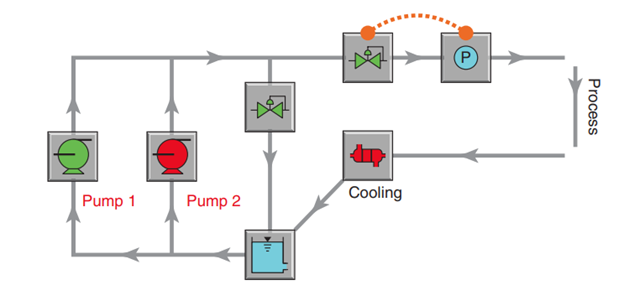
Figure 1: Initial installation and control diagram
Figure 2 shows the pump curve at full-speed operation with high pressure discharge and low flow. The system required an average of 474 m3 /h (2085 gpm) and 22 m (72 ft) to operate. The pump was discharging 1817 m3 /h (8000 gpm) at 59 m (192 ft). The flow diverter valve allowed nearly 1363 m3 /h (6000 gpm) back to the sump. The pressure-reducing valve reduced the head to the system by 37 m (120 ft).
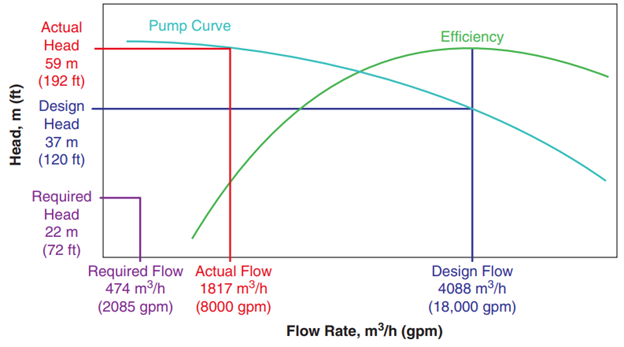
Figure 2: Pump curve full-speed operation
Description of Intervention: Two 30-kW (40-hp) pumps were installed with VFD control. One of the pumps operates while the other is an off-line standby. The system requirements of 474 m3/h (2085 gpm) at 22 m (72 ft) are now met with the pump operating at less than 1400 rpm as shown in Figure 3. The single pump is capable of more than double the required average flow to the system.
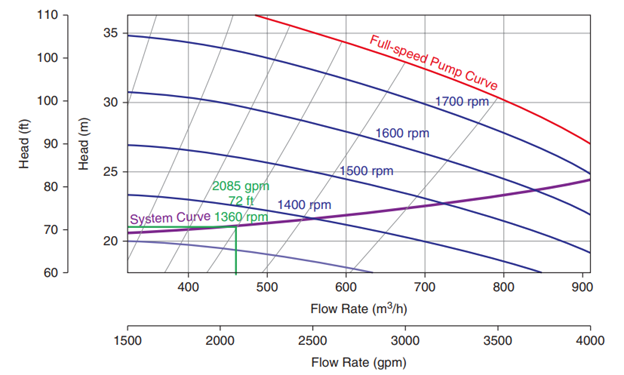
Figure 3: Pump and system curve variable speed operation
Summary of Results: Since being installed, flows to the system have been reduced even further and the pump operates at a slower speed to continuously match system demands. There have been no maintenance issues or requirements since the VFD pump has been started. Table 1 shows the return on investment for the modified pumping system.
| Electricity cost before installation | $88,800 |
| Electricity cost after installation | $9,700 |
| Electricity cost annual savings | $79,100 |
| Avoided annualized pump maintenance | $50,000 |
| Total annual savings | $129,100 |
| Project cost | $226,500 |
| Utility funding | $104,300 |
| Net project cost | $122,200 |
| Simple payback | 1.0 years |
| Project life | 15 years |
| Internal rate of return (IRR) | 106% |
Table 1: Return on investment (ROI) calculation
Conclusion: This project was identified more than 10 years before being implemented. The delay in action cost over $1.3M in electricity and maintenance costs.
Written by: Members of the Variable Speed Pumping Guideline Committee, 1st Edition
Published In: Application Guideline for Variable Speed Pumping Guidebook
Year of Publication: 2017
SUBSCRIBE TODAY
Get the latest pump industry news, insights, and analysis delivered to your inbox.